
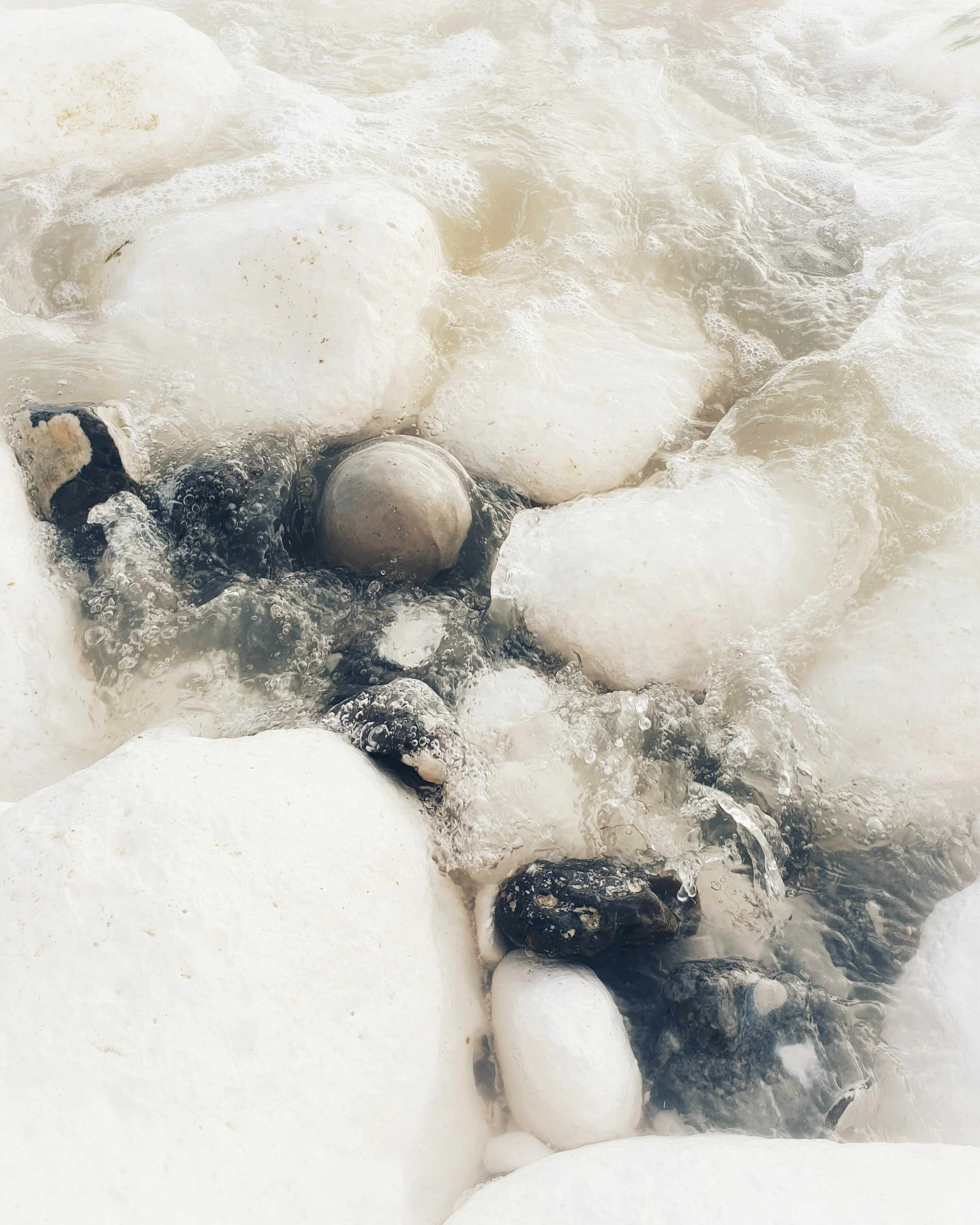
The water holds me.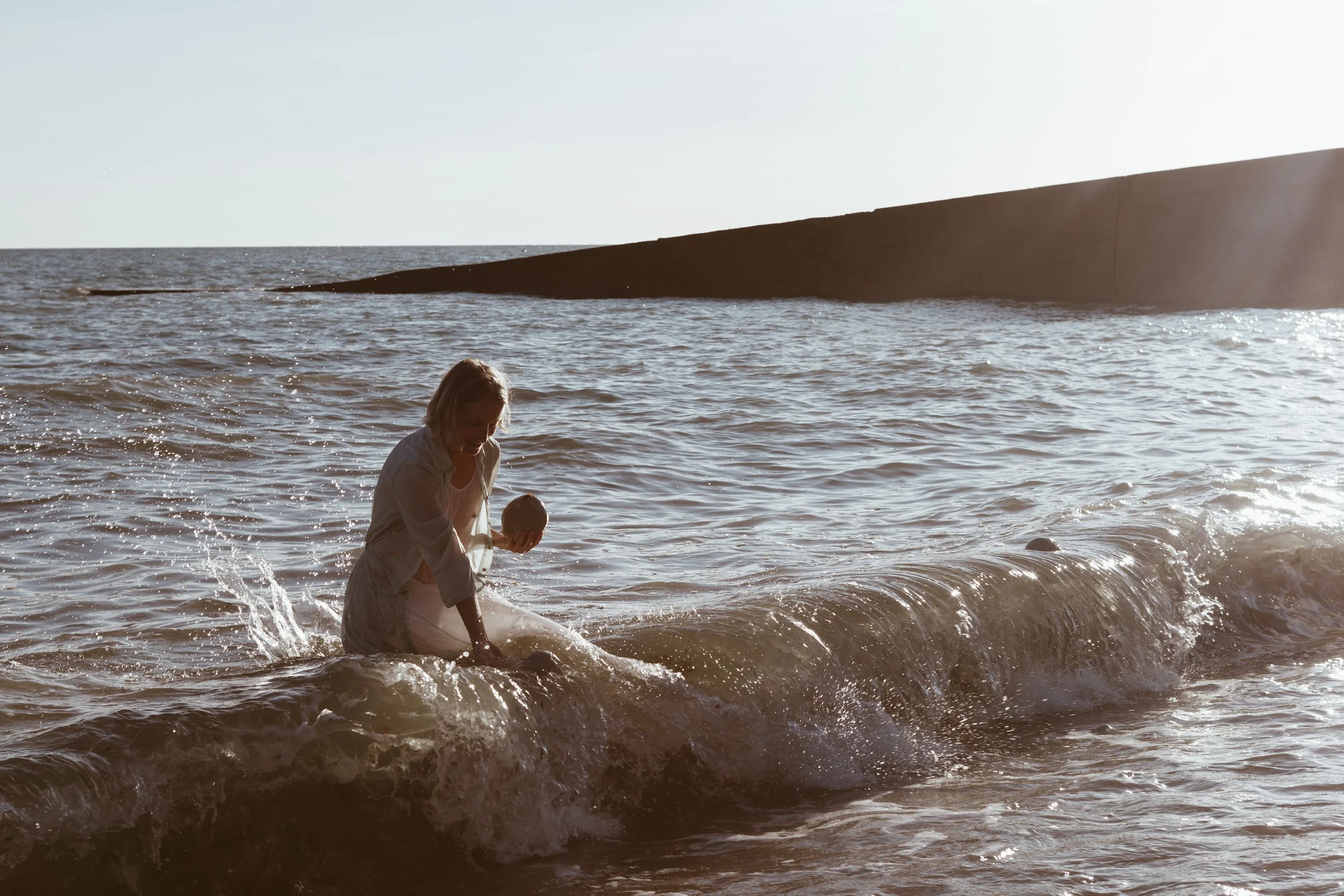
I shape vessels that remember the water. My father showed me how to dive beneath the breaks.
As an open water swimmer, he gave me the fundamental grammar of the ocean: jump the small wave, dive under the big one, surface — and look up, because there is always another one coming.
You point yourself at France. The tide decides how you get there.
An unpote is a hand-formed clay vessel that travels with me, gathering what I gather along the way. The name comes from un pote: a companion.
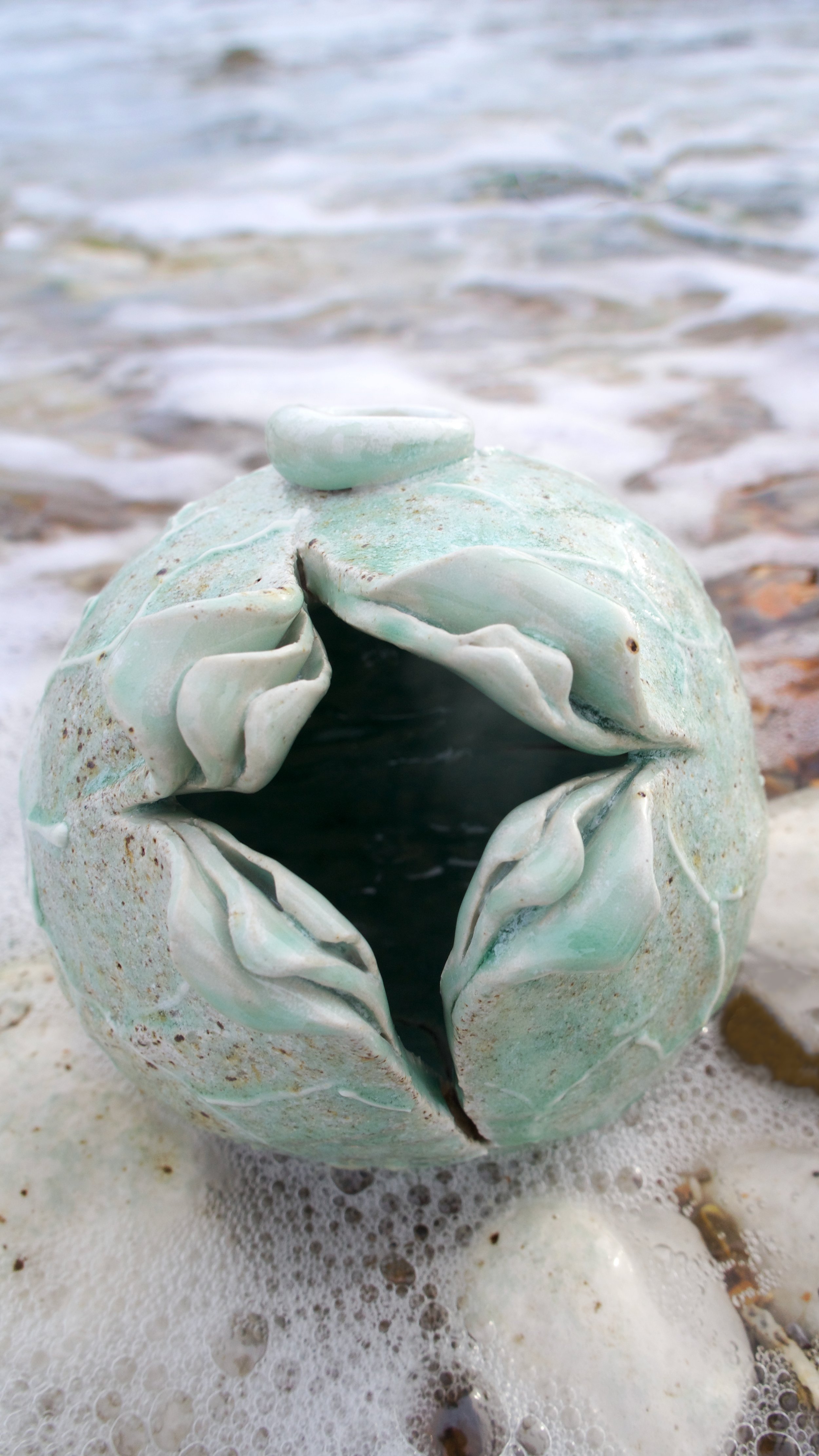
Field…
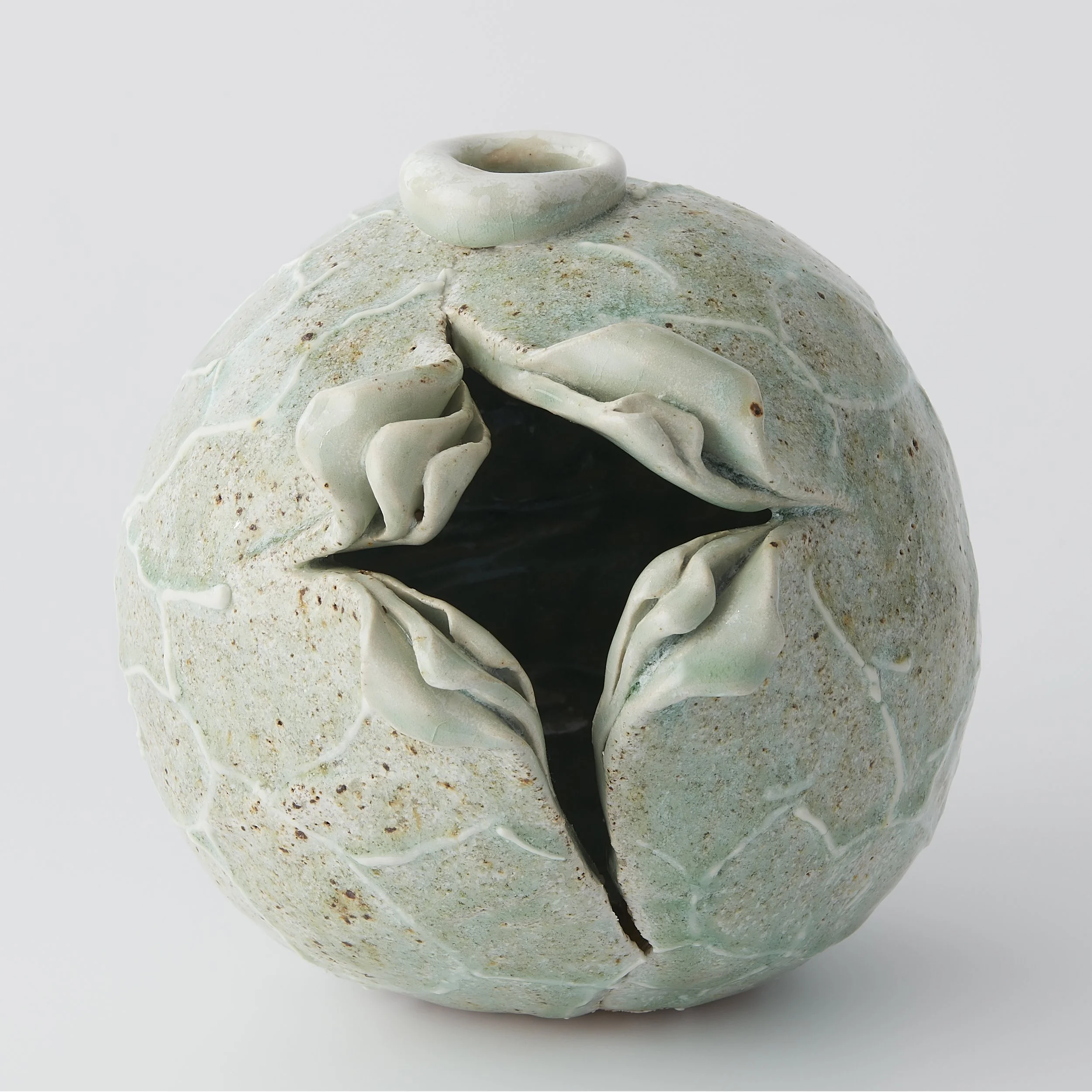
A stoneware vessel shaped in the surf at Stinson Beach, California, and broken there by a third wave, the biggest of the set. I kept the break rather than repair it, and carried the piece home to Sussex: the security wand left its own compression on the surface, and a crease marks where I sat on my suitcase to force the case shut.
Biography written without intention. It is still teaching me something, and its life is ongoing.
Ocean Break No.1
… to Studio
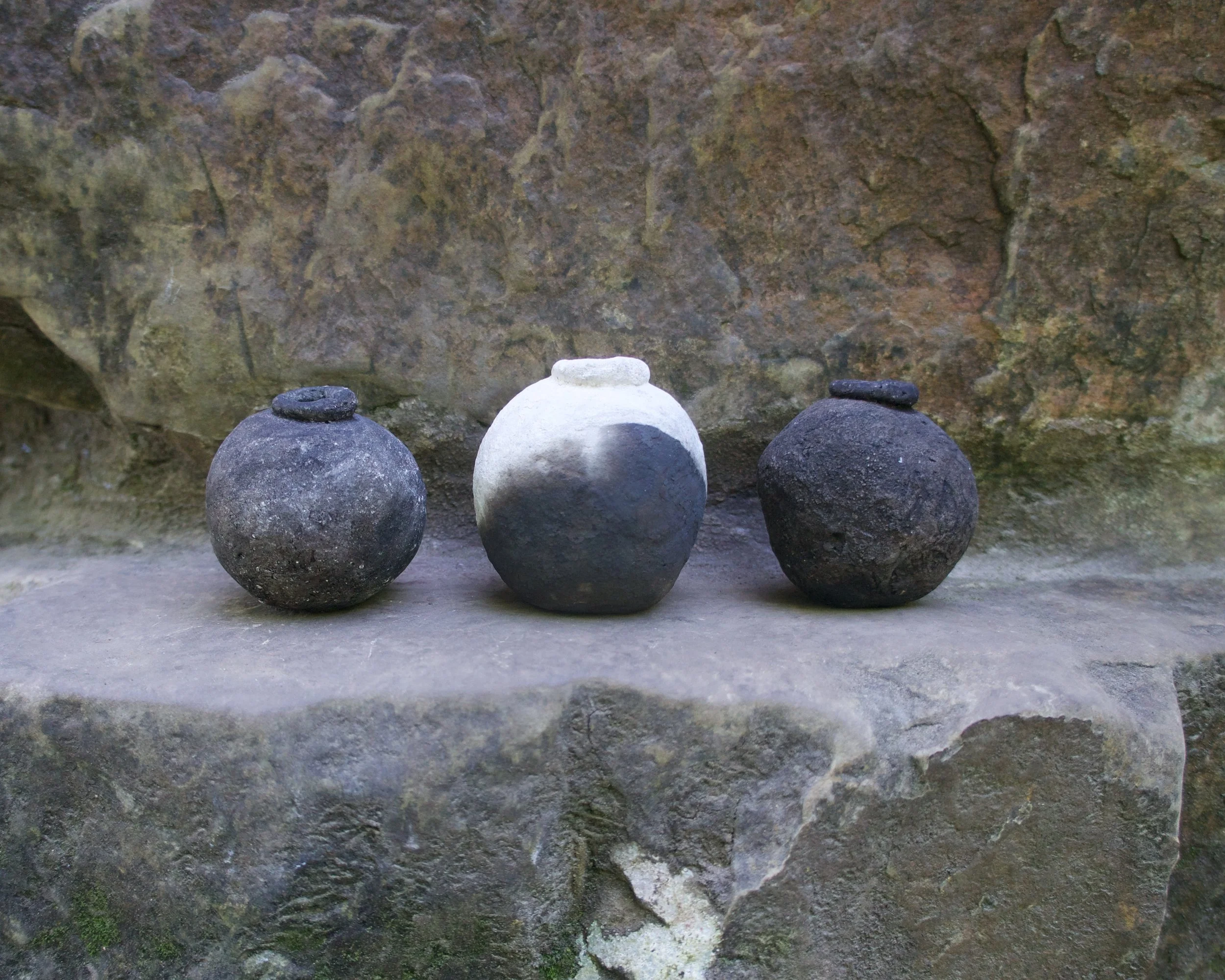
hydraulic societies
Three unpotes shaped from place-native materials, within the landscape that formed them.
Chalk slip from the Sussex coast. Fire soot. Ink cap. Each piece carries the placeborne finish as a living surface — material from the land, returned to it through the object.
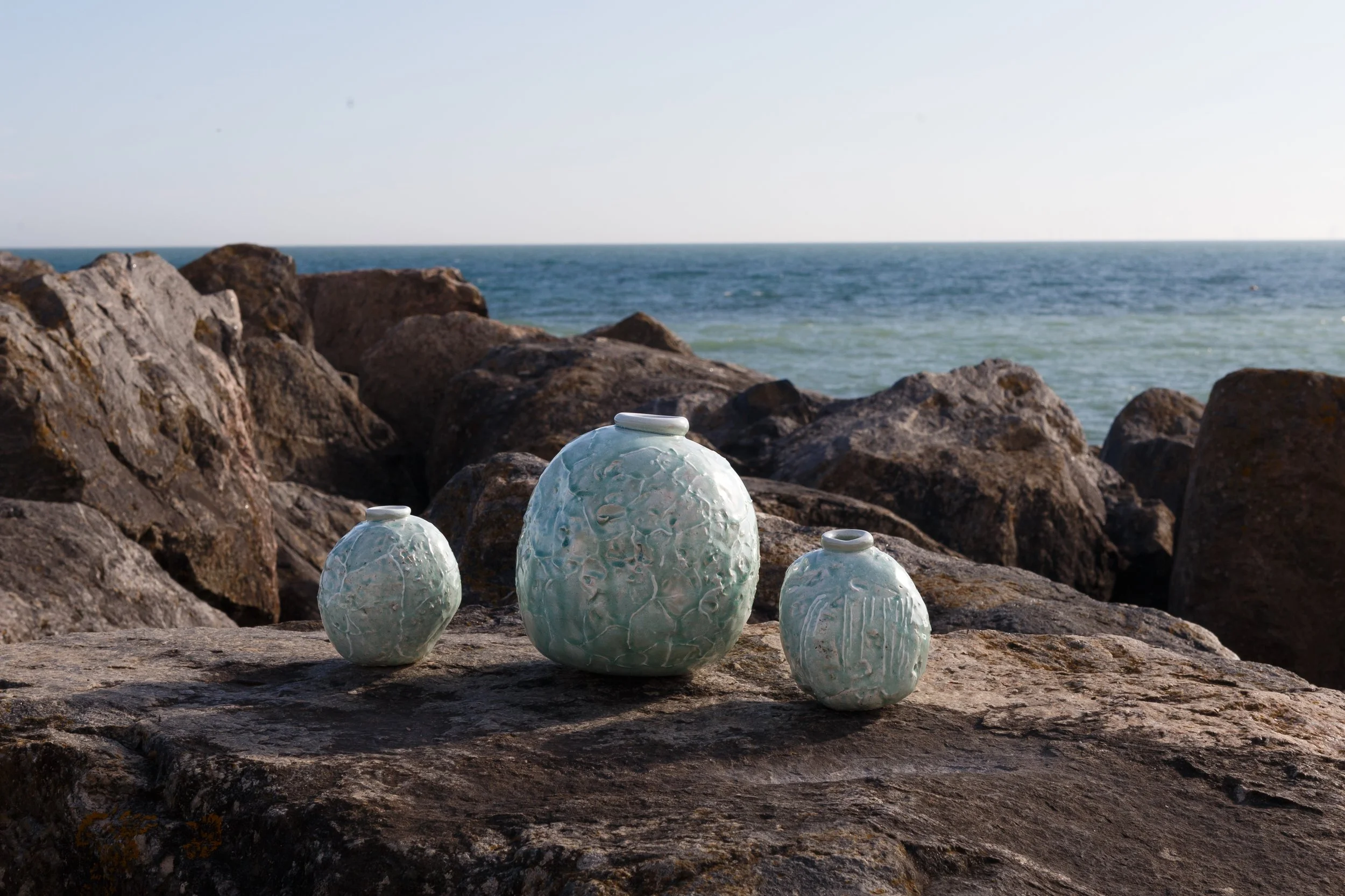
lived waters
Three vessels, three encounters, three distinct biographies. Stoneware, white and wood ash glaze, porcelain slip, 2025.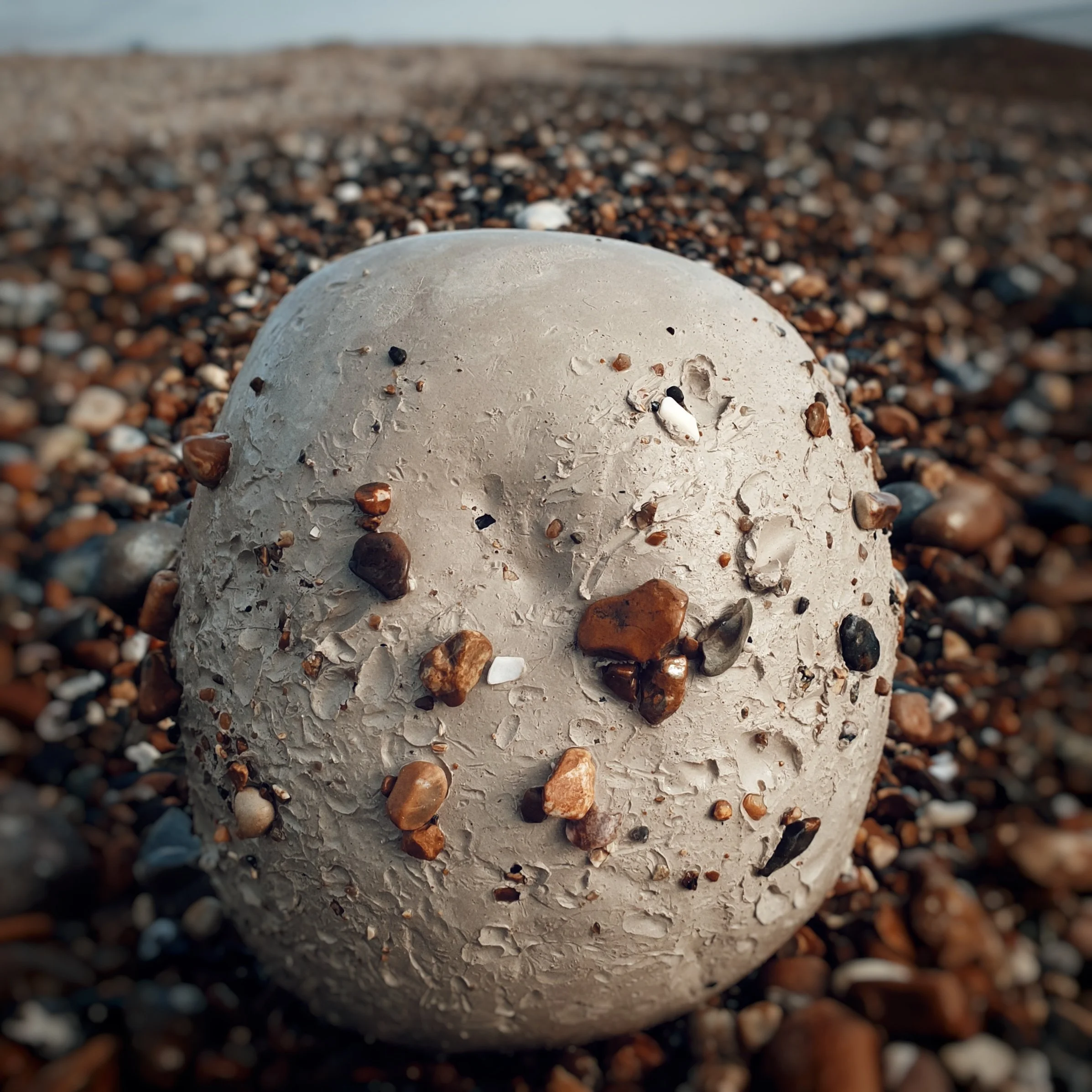
The Glyph Surface
A glyph is a mark the land made without my hand.
Each mark on the surface records a specific event of contact between vessel and place. Pebble weight. Tide pull. Sand press. Iron deposited by water.
Not decorative. Indexical.