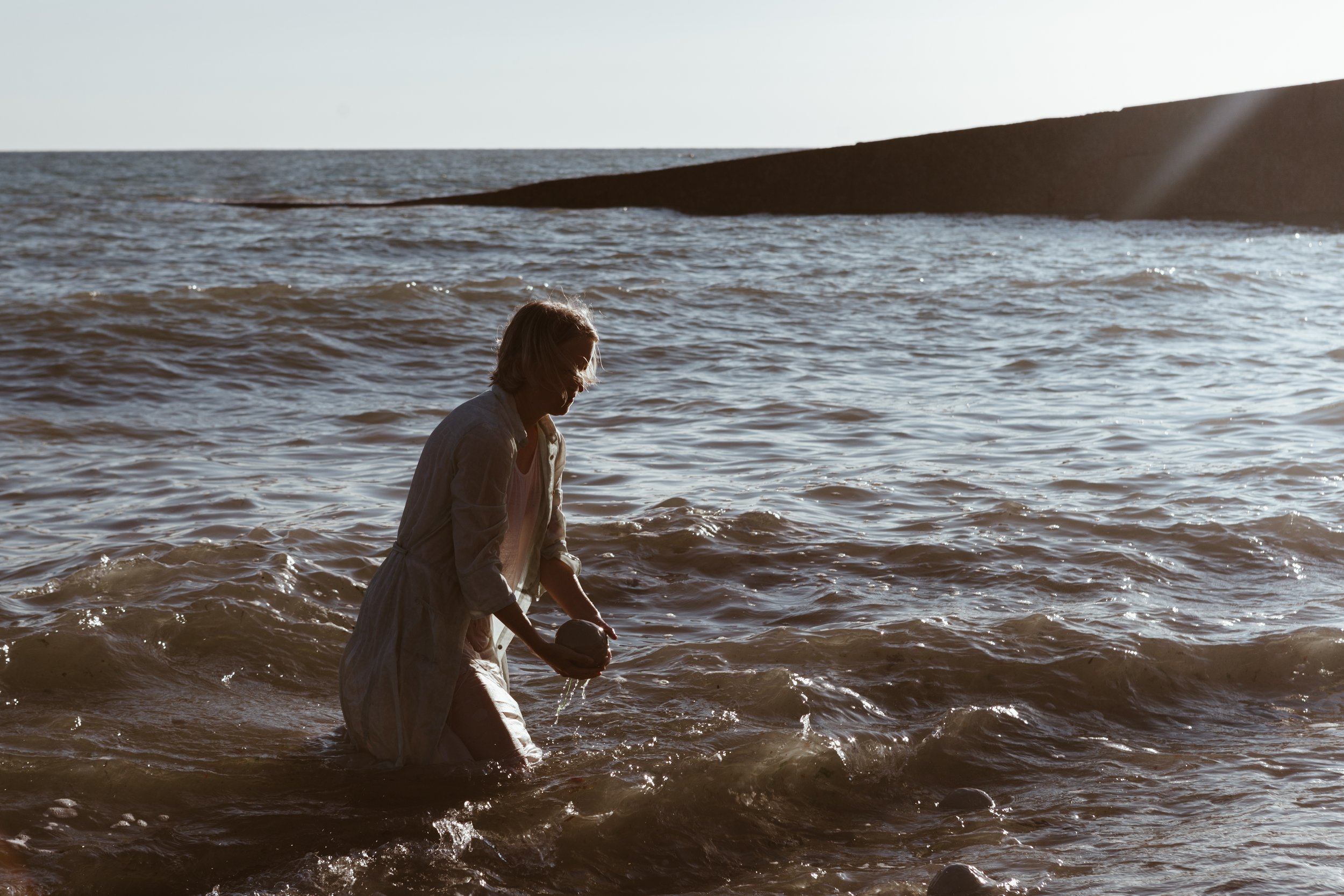
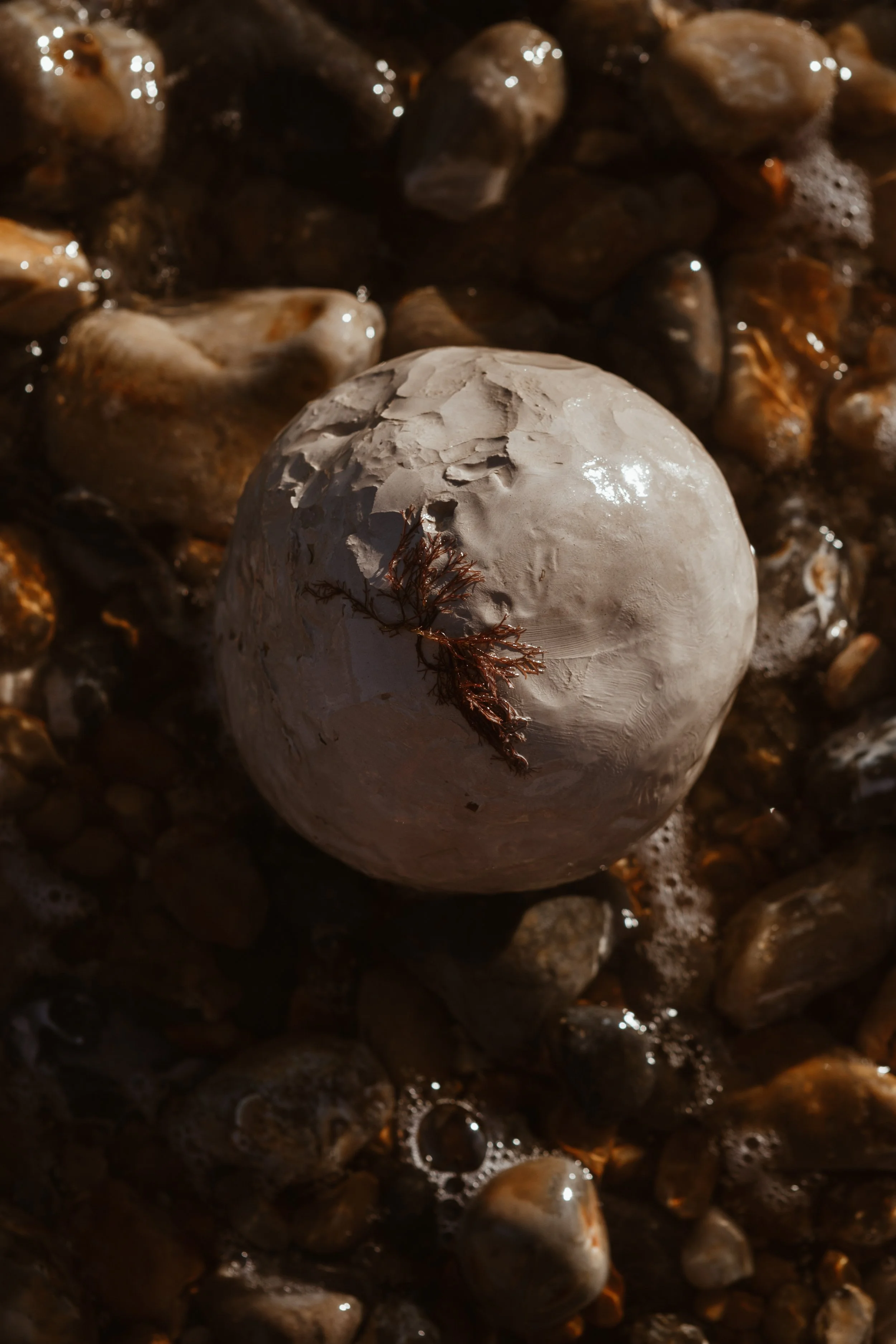
My practice is rooted in co-experience — the idea that clay and I undergo the same event together, that the vessel develops its own biography alongside mine. Each piece begins in a state of becoming — unpote — unformed and uncommitted, shaped by what acts upon it, as I am. I work in the field, in the tide, in the woodland and garden, because place is not backdrop. It is the third presence in the making.
Clay as lineage.
When I first arrived in the Low Weald, I discovered that clay was everywhere beneath my feet—orange with iron, softening in water, shaped by time. I later learned that journeyist potters once travelled across England, including Sussex, seeking clay-rich sites to share their craft. These itinerant artisans carried techniques, stories, and embodied knowledge, leaving traces in the land and in the fragments I now collect from creek beds. Working with local clay connects me to their legacy—not just through material, but through movement, adaptation, and reciprocity. In shaping vessels from the same earth, I enter into dialogue with those who came before. As John Weller of Brede Pottery once wrote:
“It is from clay I made myself, / Now I am turned to clay myself.”
The cellular kinships I once traced in regenerative biology continue to echo here, in clay and community. For those curious about that lineage, my publications are gathered on PubMed.